
SERVICE SUBPAGE
House Lifting & Raising
(House lifting/raising, House raising service)
WHY
House Lifting & Raising
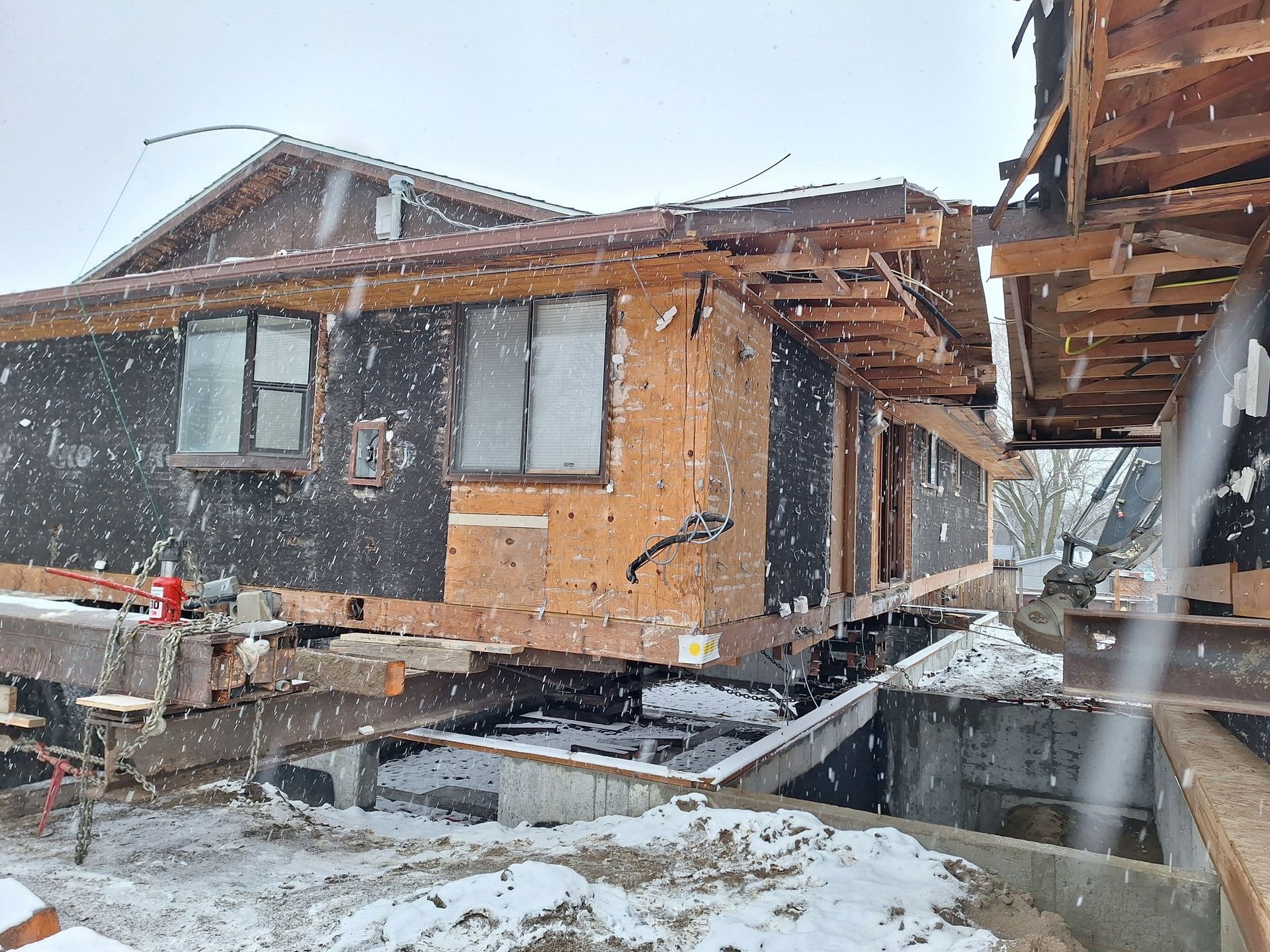
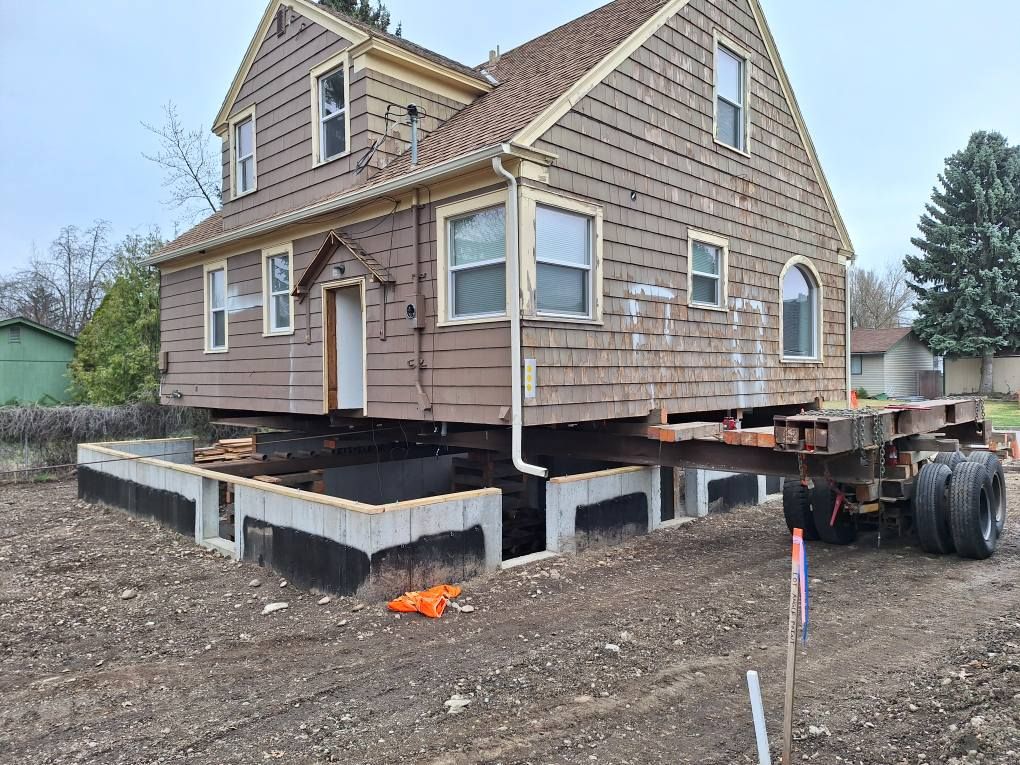
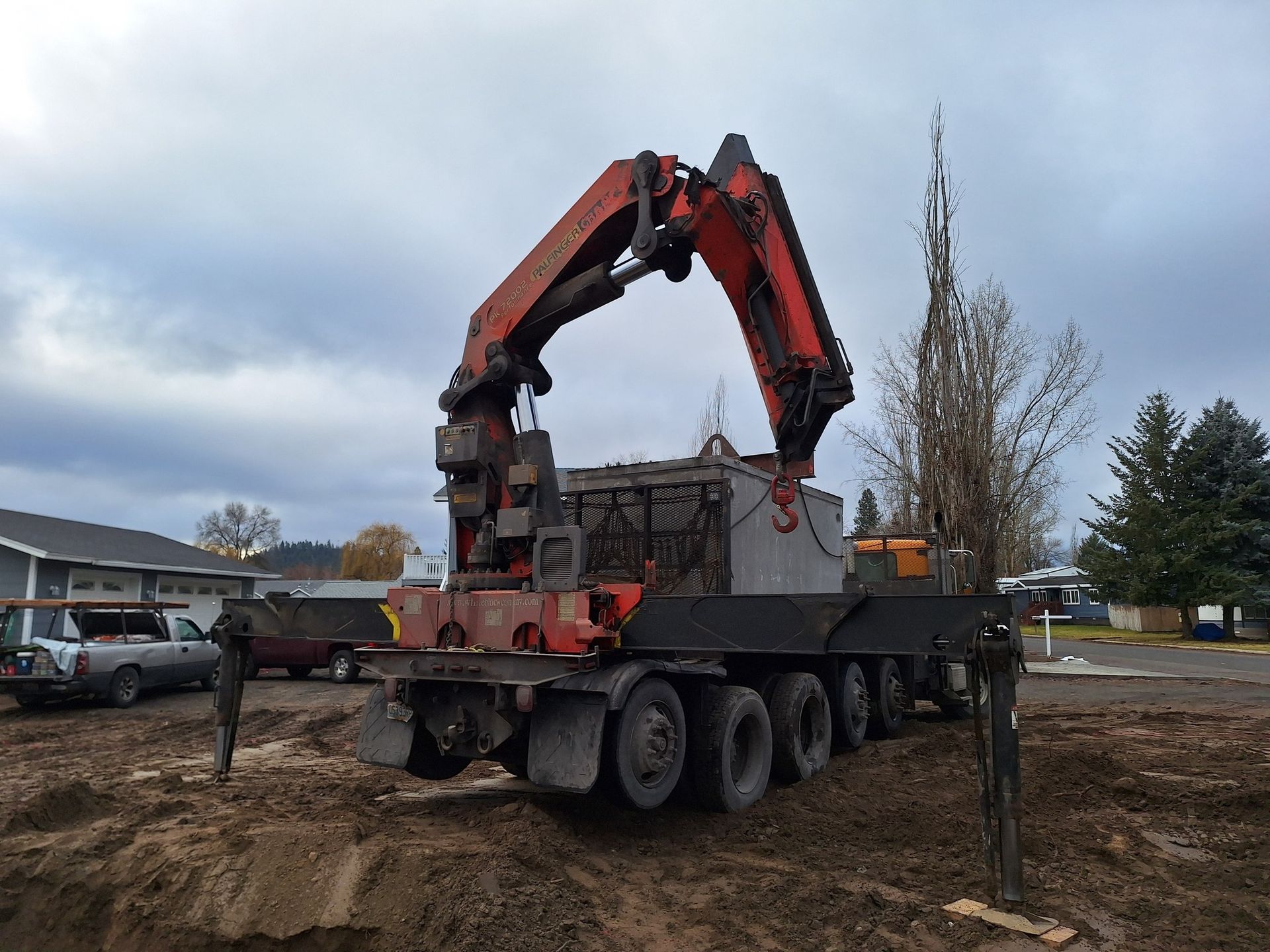
Breithaupt & Sons House Moving delivers engineered house lifting and raising solutions to elevate homes for flood mitigation, basement construction, foundation replacement, or historic restoration. Based in Spokane Valley, WA, our licensed general contractor team manages synchronized jacking, cribbing systems, underpinning, and final foundation integration. Contact (509) 413-7771 to arrange a technical evaluation.
Why House Lifting & Raising Matters
Raising a house can be the most practical solution when foundations are failing, flood elevations have changed, or you want to add livable basement space. House raising:
Protects property from flood damage by elevating finished floor elevation.
Enables foundation replacement or repair with minimal impact to the building’s finishes.
Creates new usable space in basements or lower levels by adjusting grade and foundation depth.
Preserves the original building rather than replacing it, maintaining value and character.
Safety and risk mitigation
We maintain strict safety protocols — daily inspections, competent person oversight, and documented lift sequences. Our crews are trained in cribbing safety, jack system troubleshooting, and emergency stop procedures.
Key benefits of professional house lifting
Structural integrity
Synchronized hydraulic jacks evenly lift the structure to avoid damage to framing and finishes.
Permanent solutions
New engineered foundations and tie-downs ensure long-term stability and code compliance.
Faster than full rebuild
Lifting and underpinning are often quicker than a full demolition and rebuild scenario.
Cost control
In many cases, house raising compares favorably in cost to extensive floodproofing or replacement.
Preservation of finishes
Interior finishes, millwork, and historic details can often remain intact.
How Breithaupt & Sons House Moving executes a house raising
We begin with an inspection of the existing foundation, floor framing, soil conditions, and drainage. Engineering input establishes whether a full or partial lift is required and defines jacking points and crib design.
Site evaluation and engineering review
Preparing the structure
We disconnect utilities, remove sections that interfere with jacking (porches, chimneys if needed), and reinforce areas susceptible to stress during lifting. Temporary bracing and shear reinforcement are installed where necessary.
Installing jacking systems and cribbing
Multi-point synchronized hydraulic jacking systems are placed at engineered support points. As the structure is raised in small increments, cribbing is installed beneath as a stable support until the final elevation is reached.
Excavation and foundation work
With the building elevated, we remove the old foundation or underpin the existing footings. New foundations are constructed to engineered specifications — options include poured concrete, frost-protected shallow foundation, or full basement excavation.
Common applications
Flood elevation: Raising to FEMA recommended finished floor elevations.
Foundation replacement: Correcting failing foundations due to settlement or deterioration.
Basement creation: Excavating beneath an existing structure to add usable space.
Historic preservation: Lifting to preserve a structure while replacing or improving foundation materials.
Utility or site remediation: Lifting to allow remediation of subsurface contamination or site improvements.
Technical considerations and best practices
Soil conditions: Geotechnical input is essential when founding on expansive soils or where deep frost zones exist.
Load calculations: Accurate calculation of building weight and load distribution to size jacks and cribbing.
Synchronized lifting: Using digital synchronized systems to ensure even lift and prevent twisting.
Vibration and finish protection: Measures to reduce vibration transmission to fragile finishes.
Permitting compliance: Building permits and any local floodplain or historic district approvals must be secured.
Cost factors
Extent of lift (inches vs. multiple feet)
Foundation type (crawlspace, slab-on-grade, basement)
Need for new foundation or underpinning
Complexity of access and utility disconnection/reconnection
Structural reinforcement for historic or fragile buildings
Preparing for a house lifting project — owner checklist
Secure temporary housing arrangements for the duration of on-site work.
Obtain copies of building plans and known structural records, if available.
Document finishes and valuable items are removed or protected.
Coordinate with neighbors for access and temporary disruptions.
Communicate with mortgage provider and insurance to understand coverage during the project.
Case study:
Flood elevation for a craftsman home (illustrative)
Challenge
Home located in an updated floodplain with need to raise finished floor 3 feet.
Solution
Engineering analysis, synchronized jacking, temporary bracing, removal of original foundation, poured concrete-frost-protected foundation, and final tie-in with graded drainage improvements.
Outcome
Owner achieved compliance with local flood regulations and reduced insurance premiums with elevated finished floor.
Frequently Asked Questions — House Lifting & Raising
Will my house be damaged during lifting?
With an engineered plan and experienced crew, the risk is minimized. We implement bracing and staged lifts to protect finishes.
How long does a raising project take?
Depending on complexity, lifting itself can be completed in days, but foundation replacement and site restoration will extend the timeline (weeks to months).
Can you add a new basement by lifting?
Yes — by raising and underpinning, we can excavate and construct a basement under an existing structure.
Do you handle necessary permits and inspections?
Yes — we coordinate with local building departments and schedule required inspections.
Is the house livable during the process?
Usually no; occupants need to vacate during the lift and foundation work for safety.
Contact us
Raising a house is a technical, value-preserving solution for flood mitigation, foundation repair, or space creation. Breithaupt & Sons House Moving combines engineering, safety, and contractor experience to lift structures with care, precision, and durable results.